Waterproofing Your Chimney: Why Brick Is a Sponge and What Actually Works
By Chimney Cleaners Editorial · January 12, 2026 · 9 min read
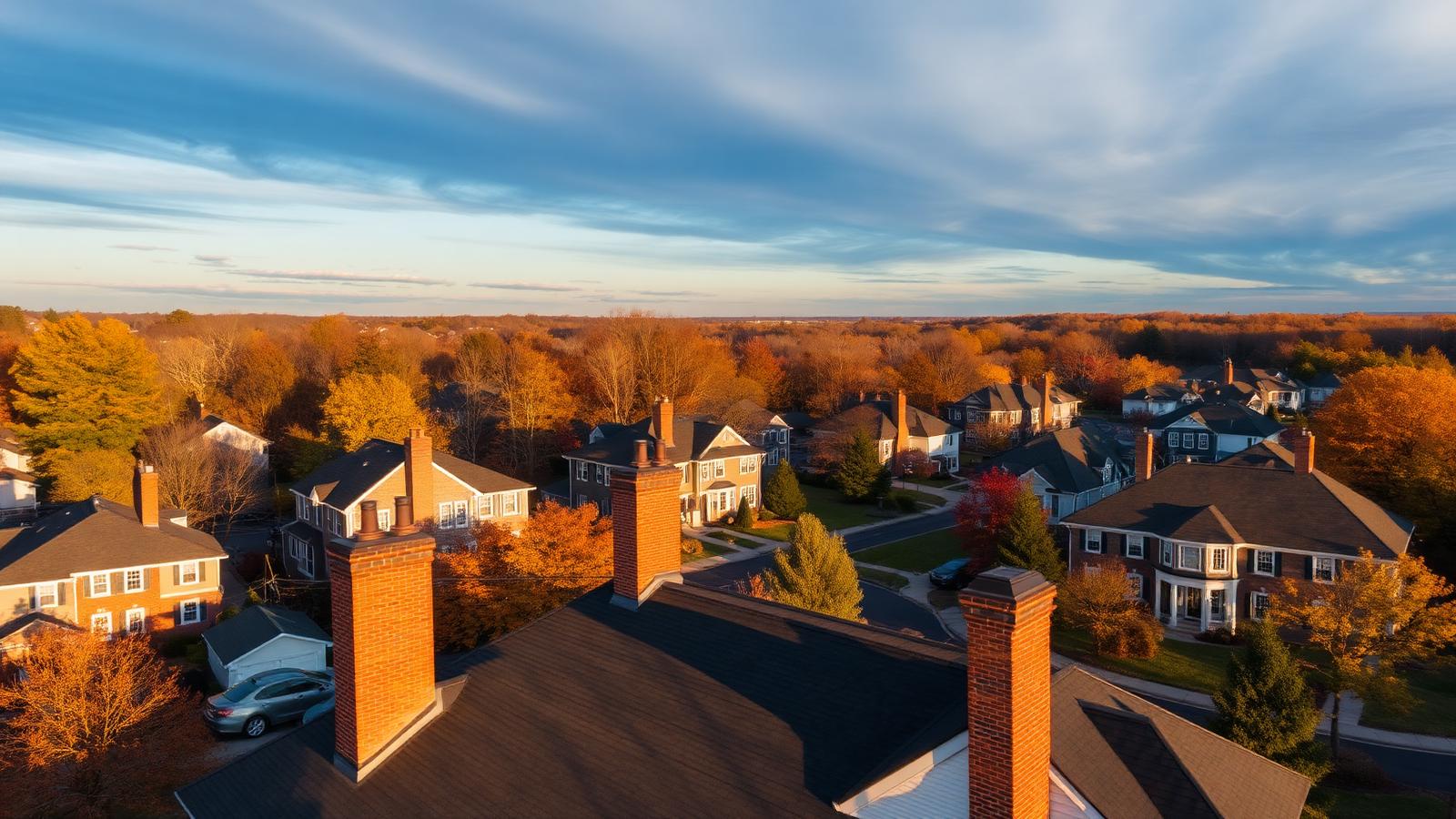
The reason NJ chimneys crumble is not age, it is water freezing inside brick 40+ times a winter. Here is what actually stops it, what makes it worse, and how to tell them apart.
Brick and mortar are porous by design. They have to be, an interior wall of a fired-clay masonry unit needs to breathe out humidity, or trapped vapor destroys the wall from inside. That same designed porosity is why an unsealed New Jersey chimney absorbs rain, snowmelt, and morning fog like a sponge, then blows itself apart when the absorbed water freezes and expands roughly 9% in every pore.
The National Weather Service records 40 to 90 freeze-thaw cycles per winter in most of New Jersey, depending on elevation. Each cycle is a microscopic explosion inside every brick face on the chimney. Multiply that by 30 or 40 winters and the result is the crumbling, spalled, orange-brick chimneys you see on every third house in an older neighborhood.
The wrong products (and why they make things worse)
This is where most homeowners lose thousands of dollars. Any film-forming sealer: Thompson's WaterSeal, generic silicone paint-on 'waterproofers,' clear masonry sealers from the big-box paint aisle, elastomeric coatings, traps interior vapor behind a plastic skin.
The chimney still absorbs some water through cracks, joints, and the crown. That water reaches the back of the sealed skin and cannot exit. On the next freeze, the water expands, and because the skin is bonded to the brick face, the pressure blows off the entire outer layer of the brick, not just a chip, the whole face plate. That is called spalling, and it is very often caused by the last homeowner trying to help.
Once spalling has started, film sealers accelerate it dramatically. Every winter takes off more brick. By year 5 you are looking at a rebuild.
The right products (and how they work)
Vapor-permeable siloxane and silane-based waterproofers: ChimneySaver, SaverSystems Chimney Saver, and a handful of similar products, work by chemically bonding to the interior pore walls of the brick. They line each individual pore with a hydrophobic (water-repelling) coating that is only a few molecules thick. Liquid water beads and rolls off; water vapor moves freely in both directions.
Independent ASTM E-514 testing on properly prepped brick shows 99.9% water repellency and 10-year warranty coverage from most manufacturers. The chimney still breathes. The chimney no longer absorbs bulk water. Freeze-thaw damage stops.
Typical NJ cost: $499 to $899 for a standard single-flue residential chimney, depending on height, access, and whether preparatory tuckpointing or crown repair is needed first.
When to waterproof
- Any chimney over 10 years old with no record of prior waterproofing
- Any chimney showing early efflorescence (white chalky staining) but no active spalling yet
- Immediately after tuckpointing, crown repair, or a rebuild, wait 30 days for full cure of new mortar first
- Every 5 to 7 years in salt-air Shore counties (Monmouth, Ocean, Atlantic, Cape May)
- Every 7 to 10 years inland
- Never over a film-sealed chimney until the film has been mechanically stripped, applying siloxane on top of silicone film accomplishes nothing
What must be repaired before waterproofing
Waterproofing is not a repair; it is preventative maintenance for a chimney that is already sound. Applied over existing damage, it seals the damage in. Before waterproofing, we always address:
- Open mortar joints (repoint with type-N or type-S mortar matching the original)
- Cracked or lifted crown (patch small cracks with flexible crown sealer, resurface if severe)
- Missing or damaged cap (install stainless mesh cap)
- Failed flashing at the roof line (this is usually a roofer's job, not ours)
- Spalled bricks (individually replace or, if extensive, rebuild the affected courses)
How to tell if yours needs it right now
Walk around the base of your chimney after a rainstorm. If you see:
- Wet, dark patches on the brick that stay wet for hours after the rain stops (bulk absorption)
- White chalky staining (efflorescence, salts leaching out as water evaporates)
- Loose sand or brick chips in the flower bed at the chimney base
- Any visible spalling (missing brick faces, exposed rougher interior brick)
- Water stains on interior ceilings near the chimney chase
Any two of those and you should have a chimney assessment before the next winter. Waterproofing after repairs will typically extend the chimney's remaining life by 25 to 40 years and is far cheaper than the alternative rebuild.
Chimney Repair in the towns this guide covers
Each local page lists pricing, code notes, and scheduling for that municipality:
- Chimney Repair in Newark, Essex County NJ
- Chimney Repair in Jersey City, Hudson County NJ
- Chimney Repair in Paterson, Passaic County NJ
- Chimney Repair in Elizabeth, Union County NJ
- Chimney Repair in Lakewood, Ocean County NJ
- Chimney Repair in Edison, Middlesex County NJ
- Chimney Repair in Woodbridge, Middlesex County NJ
- Chimney Repair in Toms River, Ocean County NJ
Nearby New Jersey towns we cover
Not in one of the towns above? These are the regions where this issue comes up most, with a dedicated local page for each municipality.
Older urban housing stock
Pre-1940 row houses and multi-family buildings commonly have unlined or shared flues.
North Jersey freeze-thaw belt
Repeated freeze-thaw cycles open mortar joints and spall brick faster than the rest of the state.
Central & suburban New Jersey
Post-war and 1980s subdivisions where prefab fireboxes and factory chases dominate.
Related services
Ready to schedule?
Certified NJ sweeps. Written quote within 24 hours by email or text, no phone tag.
Get My Free Quote