Smoky Fireplace? A Systematic Troubleshooting Guide
By Chimney Cleaners Editorial · January 5, 2026 · 10 min read
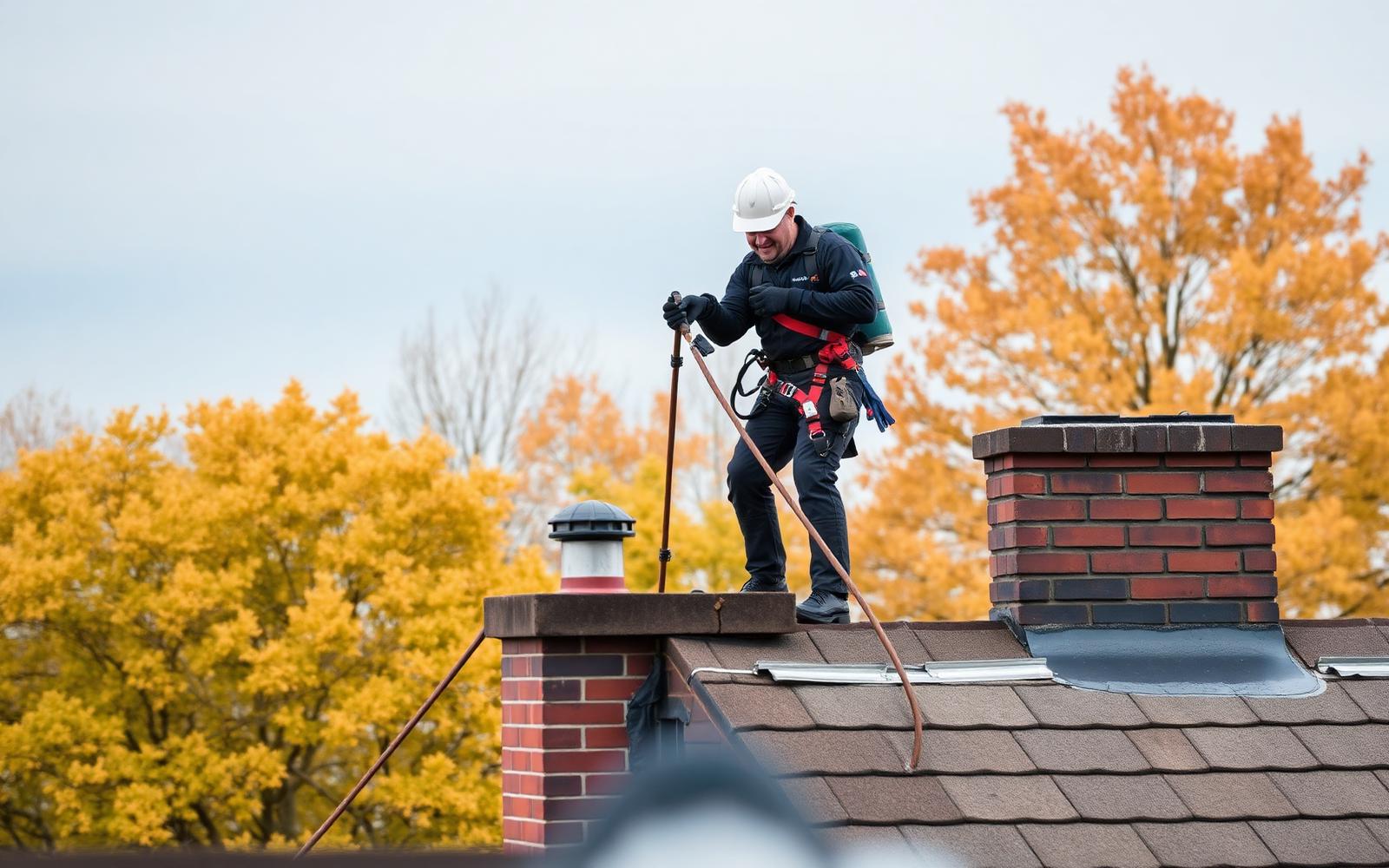
Smoke in the room is a draft problem, not a wood problem. Here is the checklist we run before we ever pick up a brush, in the order we check them.
A fireplace works because hot air rises. That column of rising hot air inside the flue creates a pressure difference between the firebox and the room, and that pressure difference pulls fresh combustion air into the firebox through the front. Anything that interrupts, weakens, or reverses that rising column causes smoke to spill into the room instead of going up.
Smoke problems are almost never a wood problem and almost always a draft problem. Here is the checklist we run when a homeowner calls with smoke spillage, in the exact order we check it, from free-to-fix to full-repair.
1. Cold flue (the priming problem)
The single most common cause. An exterior masonry chimney on a cold day is full of dense, cold air that is heavier than the warm room air. Light a fire underneath it and the flame just pushes lazily against that plug of cold air, it does not have enough thermal energy to displace it. Smoke rolls into the room until the flue warms up.
The fix is free: roll a full sheet of newspaper into a loose torch, light one end, and hold it up inside the damper opening for 60 seconds before you light the actual fire. That warms the first 6 to 8 feet of flue, breaks the cold-air plug, and starts the draft column. Once you feel air being pulled up around the torch, light the fire. Works essentially every time.
2. Damper not fully open
Reach up into the throat of the fireplace with a flashlight and physically look at the damper plate. A fully-open throat damper sits parallel to the floor or tilted back 90 degrees. A partially-open damper looks like a shelf angled downward. Rusted throat dampers stick in partial positions and homeowners assume they are fully open because 'the handle is all the way over.'
Fix: manually work the damper open with gloved hands. If it will not fully open, that is a repair call, typically a $250 to $400 damper replacement or a top-mount damper install.
3. Closed-house negative pressure
Modern weatherized homes with tight windows, insulated walls, and high-CFM exhaust equipment (range hoods, bath fans, clothes dryers, HRV systems) can literally suck air down the chimney because those exhaust appliances are winning the pressure battle against the fireplace. This is called depressurization, and in a really tight home it is powerful enough to reverse a healthy chimney.
Fix: crack a window in the room with the fireplace by 1 to 2 inches for the first 10 minutes of the fire. If that stops the smoke, you have your answer. Longer-term, an outside-air kit routed directly to the firebox solves it permanently for $400 to $800 installed.
4. Undersized or dirty flue
Creosote reduces the flue's cross-sectional area fast. A 1-inch buildup on the walls of an 8x12 rectangular clay tile reduces the flow area by more than 30%. That is enough to kill draft on any but the smallest fires. If it has been more than 12 months since a professional sweep, that is very likely the cause and no amount of window-cracking will fix it.
Fix: schedule a sweep. A $189 to $350 service call answers the question in 45 minutes.
5. Flue too short for the roofline
NFPA 211 and the International Residential Code both require the chimney top to be at least 3 feet above the roof penetration and at least 2 feet above anything within a 10-foot horizontal radius (this is the '3-2-10 rule'). Additions, dormers, second-story roofs on neighboring houses, and mature trees within that radius can all put an originally compliant chimney out of code years after it was built.
Symptom: fireplace draws fine on calm days but smokes badly whenever the wind is from a specific direction.
Fix: chimney extension. A 2-4 foot extension with matching brick or a stainless class-A chimney extension runs $800 to $2,500 depending on materials.
6. Blocked cap or spark arrestor
Bird nests, squirrel nests, wind-blown leaf packs, and creosote-choked mesh screens all reduce the cap's net free area. Very common in spring and early fall.
Fix: rooftop visual inspection or a quick internal camera scan through the flue looking up.
7. Firebox opening too large for the flue
The ratio of firebox opening area to flue cross-sectional area should be roughly 10:1 for masonry fireplaces. Old Rumford-style fireplaces and oversized modernist openings often violate this ratio, meaning the fireplace opening simply cannot pull enough air through the too-small flue.
Fix: a smoke guard (a black steel strip mounted at the top of the firebox opening) lowers the effective opening by 4 to 6 inches and immediately corrects the ratio. Approximately $150 installed, and the effect is night-and-day.
8. Kitchen range hood or bath fan competing
Modern range hoods commonly move 400 to 1,200 CFM. A residential fireplace draws roughly 200 to 400 CFM at full burn. The hood will win every time. If your smoke problem starts the moment someone turns on the kitchen fan, that is your answer.
Fix: turn off all mechanical exhaust in the house before lighting a fire. Long-term, a makeup-air unit connected to the range hood is required by code in most new construction and eliminates the conflict.
9. Wind-induced downdraft
Chimneys downwind of a taller structure (a two-story addition, a neighbor's house, a hill) can experience wind rolling over the top and diving into the flue. The physics is straightforward: the wind creates a low-pressure zone on the leeward side of the tall structure that reverses the natural draft column below.
Fix: a vacuum-style cap: Vacu-Stack is the common brand, uses the passing wind to create suction on the flue opening regardless of wind direction. Approximately $400 to $700 installed and it eliminates downdraft permanently.
10. Wet wood
Always the last thing homeowners suspect and often the actual cause. Wet wood produces cool, steamy smoke that has neither the temperature nor the buoyancy to establish a healthy draft column. See our seasoned firewood guide for how to test moisture and buy properly.
The 30-second self-diagnosis
Before calling anyone, run this test. On a cold, still day, prime the flue with a paper torch for 60 seconds. Fully open the damper. Turn off every fan in the house. Crack a window near the fireplace 2 inches. Light a small, hot fire with dry kindling and small pieces of dry hardwood.
If it draws cleanly under those conditions, your chimney is fine and the problem is one of the operating conditions (fans, negative pressure, wet wood). If it still smokes under those conditions, the problem is in the chimney itself, flue, cap, or geometry, and you need a professional inspection.
Chimney Sweeping in the towns this guide covers
Each local page lists pricing, code notes, and scheduling for that municipality:
- Chimney Sweeping in Newark, Essex County NJ
- Chimney Sweeping in Jersey City, Hudson County NJ
- Chimney Sweeping in Paterson, Passaic County NJ
- Chimney Sweeping in Elizabeth, Union County NJ
- Chimney Sweeping in Lakewood, Ocean County NJ
- Chimney Sweeping in Edison, Middlesex County NJ
- Chimney Sweeping in Woodbridge, Middlesex County NJ
- Chimney Sweeping in Toms River, Ocean County NJ
Nearby New Jersey towns we cover
Not in one of the towns above? These are the regions where this issue comes up most, with a dedicated local page for each municipality.
Older urban housing stock
Pre-1940 row houses and multi-family buildings commonly have unlined or shared flues.
North Jersey freeze-thaw belt
Repeated freeze-thaw cycles open mortar joints and spall brick faster than the rest of the state.
Central & suburban New Jersey
Post-war and 1980s subdivisions where prefab fireboxes and factory chases dominate.
Related services
Ready to schedule?
Certified NJ sweeps. Written quote within 24 hours by email or text, no phone tag.
Get My Free Quote