The Seasoned Firewood Guide: Species, Moisture, and Stacking
By Chimney Cleaners Editorial · January 21, 2026 · 12 min read
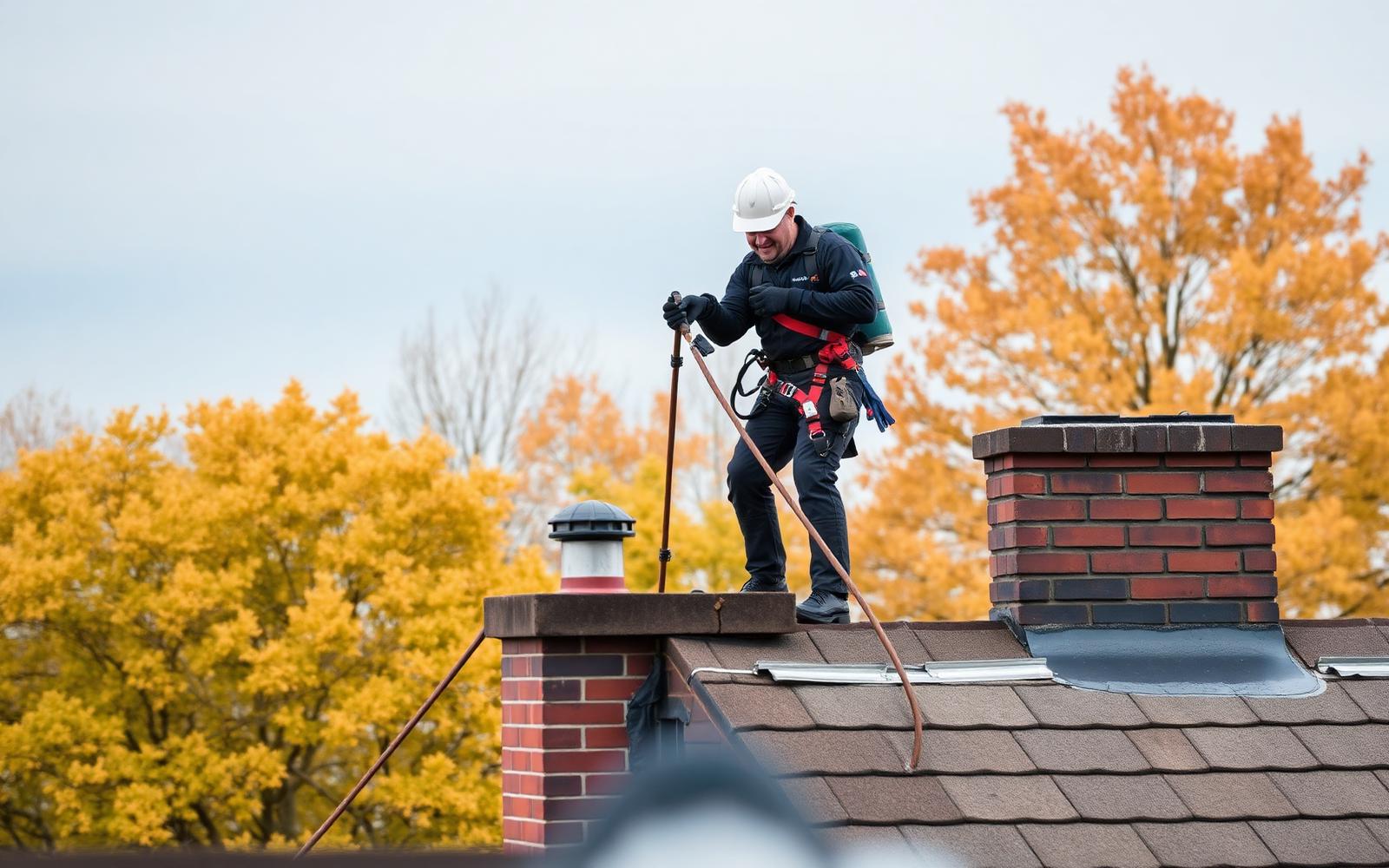
Ninety percent of the creosote we scrape out of chimneys started as wet wood. Here is the complete guide to buying, splitting, seasoning, and burning it right, by BTU rating, species, and moisture content.
A fireplace does not have a creosote problem. It has a wet wood problem. Every pound of water in a firewood log has to be boiled off before that log will burn cleanly, and it takes roughly 1,000 BTU to evaporate a single pound of water. A log at 40% moisture spends nearly half its heating value drying itself out instead of warming your house, and the cool, steamy smoke it produces condenses on the flue walls as sticky, acidic creosote.
The same log split, stacked, and dried to 18% moisture burns hot enough to keep the flue above condensation temperature. It leaves almost no deposit. This one variable, moisture content, controls more of your annual chimney health than the sweep, the liner material, or the fireplace design combined.
BTU by species: Northeast US hardwoods
BTU ratings below are per cord of properly seasoned wood at ~20% moisture, from USDA Forest Service and University of Nebraska Extension data.
- Shagbark hickory, ~27.7 million BTU/cord (top tier, dense, slow-splitting)
- Black locust, ~27.9 million BTU/cord (top tier, rot-resistant, seasons fast)
- White oak, ~26.4 million BTU/cord (excellent long burn, needs 18 to 24 months)
- Red oak, ~24.6 million BTU/cord (slightly faster to season than white)
- Sugar maple, ~24.0 million BTU/cord (classic New England firewood)
- American beech, ~24.0 million BTU/cord (splits hard, burns clean)
- Yellow birch, ~21.8 million BTU/cord (good shoulder-season wood)
- White ash, ~20.0 million BTU/cord (seasons in 9 to 12 months, easy to split)
- Black cherry, ~20.0 million BTU/cord (pleasant aroma, moderate output)
- Red maple, ~18.7 million BTU/cord (soft maple, seasons quickly)
What to avoid burning inside a fireplace
- Any softwood (pine, spruce, hemlock, fir), high resin content produces creosote 3 to 4x faster than hardwood
- Construction lumber scraps, may contain glue, arsenic-treated pressure-treated wood (CCA), or paint
- Driftwood, salt content produces corrosive chlorine gas and eats stainless liners
- Painted, stained, or engineered wood (plywood, OSB, particle board), releases formaldehyde and other toxic compounds
- Christmas trees, holiday decorations, wrapping paper, cardboard, fast, hot flare-ups that can ignite creosote
- Wet wood of any species, if the meter reads over 25%, it is not ready
The 20% moisture rule (and how to actually measure it)
A pin-style moisture meter costs $20 to $30 at any hardware store and will pay for itself in the first winter by cutting your creosote sweep interval in half. Do not measure the outside face of a log, that always reads dry. Instead:
- Take a log from the middle of the stack (not the top row, not the ground row)
- Split it fresh with a maul or hatchet, exposing the interior wood
- Immediately press the meter pins into the freshly exposed face, across the grain
- Take three readings and average them
- Under 20%: ready to burn
- 20 to 25%: borderline; will still smoke and produce moderate creosote
- Over 25%: not ready, stack it for another season
How long does seasoning actually take?
Cut-and-split-and-stacked, in a sunny spot with good airflow, in the Northeast climate:
- White oak: 18 to 24 months
- Red oak, hickory, sugar maple: 12 to 18 months
- Ash, beech, birch: 9 to 12 months
- Cherry, red maple, soft maple: 6 to 9 months
- Any wood cut and stacked in log-length rounds without splitting: add 12 months
- Any wood stored in an enclosed shed with poor airflow: add 6 months
The reason 'seasoned' from a Craigslist ad usually is not seasoned: cut-to-length green wood loses maybe 3 to 5% moisture in its first year sitting in a pile. Split-and-stacked wood loses 30 to 40%. The words 'seasoned firewood' are functionally meaningless without a moisture reading.
Stacking for maximum airflow
- Off the ground on pallets, 2x4s, or gravel, ground contact wicks water back up
- Bark side up on the top row to shed rain (bark is nature's shingle)
- South-facing exposure if possible, with the long axis of the stack aligned to catch prevailing wind
- Top-covered only, tarp the top 12 inches, leave the sides fully open (a fully tarped stack rots)
- Two rows deep maximum, with a hand's width of gap between rows for cross-ventilation
- Ends supported by a proper cribbed stack, a metal firewood rack, or T-posts, not by leaning against a fence
How to buy without getting ripped off
A legal cord in New Jersey (and every other US state) is 128 cubic feet: a stack 4 feet high, 4 feet deep, and 8 feet long. A 'face cord' or 'rick' is one-third of that: 4 x 8 x 16 inches. 'Truckload' is not a legal measure and means whatever the seller wants it to.
- Insist on cord or face-cord pricing in writing before delivery
- Stack the wood yourself immediately and measure it, reputable sellers expect this
- Take a moisture reading from three random logs before paying
- Typical NJ pricing (2026): $260 to $380 per cord of seasoned mixed hardwood, delivered and stacked
- Kiln-dried wood runs 30 to 50% more but arrives at 12 to 15% moisture and is worth it for occasional burners
The bottom line for your chimney
Homeowners who burn only 20%-or-below hardwood typically need a sweep every 18 to 24 months. Homeowners who burn wet, unseasoned, or mixed softwood need one every 6 to 8 months and are 4 to 6x more likely to have a chimney fire. Wood quality is not a small factor, it is the factor. Buy a moisture meter this weekend.
Chimney Sweeping in the towns this guide covers
Each local page lists pricing, code notes, and scheduling for that municipality:
- Chimney Sweeping in Newark, Essex County NJ
- Chimney Sweeping in Jersey City, Hudson County NJ
- Chimney Sweeping in Paterson, Passaic County NJ
- Chimney Sweeping in Elizabeth, Union County NJ
- Chimney Sweeping in Lakewood, Ocean County NJ
- Chimney Sweeping in Edison, Middlesex County NJ
- Chimney Sweeping in Woodbridge, Middlesex County NJ
- Chimney Sweeping in Toms River, Ocean County NJ
Nearby New Jersey towns we cover
Not in one of the towns above? These are the regions where this issue comes up most, with a dedicated local page for each municipality.
Older urban housing stock
Pre-1940 row houses and multi-family buildings commonly have unlined or shared flues.
North Jersey freeze-thaw belt
Repeated freeze-thaw cycles open mortar joints and spall brick faster than the rest of the state.
Central & suburban New Jersey
Post-war and 1980s subdivisions where prefab fireboxes and factory chases dominate.
Related services
Ready to schedule?
Certified NJ sweeps. Written quote within 24 hours by email or text, no phone tag.
Get My Free Quote