Prefab vs. Masonry Fireplaces in NJ: How to Tell What You Have and Why It Matters
By Chimney Cleaners Editorial · January 23, 2026 · 8 min read
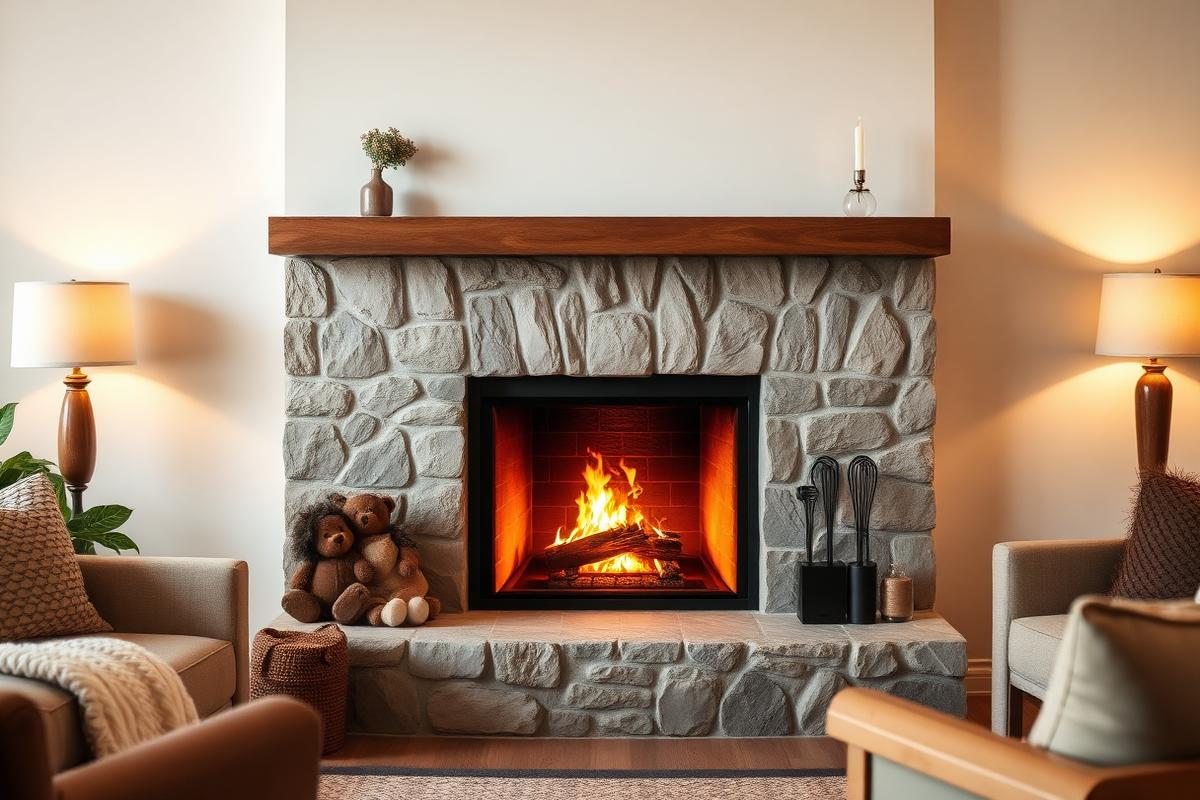
From the couch they look identical. From a maintenance standpoint they are completely different animals. Here is how to tell which one you have, and what to do next.
Roughly one-third of the fireplaces in New Jersey homes built after 1970 are factory-built prefab units, not full masonry. Homeowners often do not know which they have, the mantel, hearth, and firebox opening can look nearly identical from the living room. The maintenance realities are completely different, and knowing which you have is step one to caring for it correctly.
How to tell what you have, the 3-minute check
Open the damper (or looking from outside, look up the flue with a flashlight). Then:
- Look at the firebox walls: refractory panels held in place with metal channels = prefab. Solid brick laid in a herringbone or running-bond pattern = masonry.
- Look at the back wall of the firebox: a metal seam running vertically or a manufacturer label plate = prefab. Continuous brick = masonry.
- Look up past the damper: a round or square metal pipe = prefab class-A metal chimney. Rectangular clay tile with visible mortar joints = masonry.
- Look at the chimney from outside: a metal cap on top of a wood chase clad in siding or stucco = prefab. Solid brick or stone from roofline to top = masonry.
- Check for a UL listing plate inside the firebox at the top edge, prefabs are required to have one, masonry fireplaces never do.
Prefab maintenance profile
Prefab metal fireplaces (Heatilator, Majestic, Superior, Marco, FMI, Astria are common brand names) are UL-listed appliances, not built structures. They have a defined service life, typically 25 to 35 years for the fireplace unit and 30 to 40 years for the metal chimney sections. They cannot be repaired the way masonry can; failed components must be replaced with manufacturer-specified parts, and if the original manufacturer is out of business, the whole unit typically must be replaced.
- Annual sweep and inspection: yes, same as masonry
- Refractory panel inspection and replacement at 15 to 25 years: $800 to $2,200
- Metal chimney section replacement at 25 to 35 years: $1,800 to $4,500
- Full unit replacement at end of service life: $3,500 to $8,000+
- Waterproofing: not applicable (no masonry to seal)
- Tuckpointing: not applicable
Masonry maintenance profile
Full masonry fireplaces are structural components of the house with essentially indefinite service lives if maintained. Every component is individually repairable or replaceable.
- Annual sweep and inspection: yes
- Waterproofing every 5 to 10 years: $499 to $899
- Tuckpointing at 40 to 60 years: $1,200 to $4,500
- Crown resurface at 30 to 50 years: $800 to $1,600
- Cap replacement at 15 to 25 years: $249 to $500
- Reline at 50 to 80 years if clay tile fails: $2,400 to $4,800
Which one is 'better'?
Neither. They are different tools. Prefab was standard in NJ suburban construction from about 1975 to 2005 because it is dramatically cheaper to install, no foundation required, no mason on site, framed by carpenters as part of the wall assembly. Masonry costs 3 to 5x more to build initially but provides indefinite service life and higher resale value.
The single mistake to avoid: treating a prefab like masonry. Homeowners who tuckpoint a prefab chase (the exterior siding around the metal chimney) or try to reline a prefab with a masonry-style liner have not done anything useful and may have voided the UL listing. Prefabs get manufacturer parts. Full stop.
Chimney Inspection in the towns this guide covers
Each local page lists pricing, code notes, and scheduling for that municipality:
- Chimney Inspection in Newark, Essex County NJ
- Chimney Inspection in Jersey City, Hudson County NJ
- Chimney Inspection in Paterson, Passaic County NJ
- Chimney Inspection in Elizabeth, Union County NJ
- Chimney Inspection in Lakewood, Ocean County NJ
- Chimney Inspection in Edison, Middlesex County NJ
- Chimney Inspection in Woodbridge, Middlesex County NJ
- Chimney Inspection in Toms River, Ocean County NJ
Nearby New Jersey towns we cover
Not in one of the towns above? These are the regions where this issue comes up most, with a dedicated local page for each municipality.
Older urban housing stock
Pre-1940 row houses and multi-family buildings commonly have unlined or shared flues.
North Jersey freeze-thaw belt
Repeated freeze-thaw cycles open mortar joints and spall brick faster than the rest of the state.
Central & suburban New Jersey
Post-war and 1980s subdivisions where prefab fireboxes and factory chases dominate.
Ready to schedule?
Certified NJ sweeps. Written quote within 24 hours by email or text, no phone tag.
Get My Free Quote