Essex & Hudson County Urban Chimney Guide: Shared Flues, Rowhouses, and the Furnace Problem
By Chimney Cleaners Editorial · February 8, 2026 · 10 min read
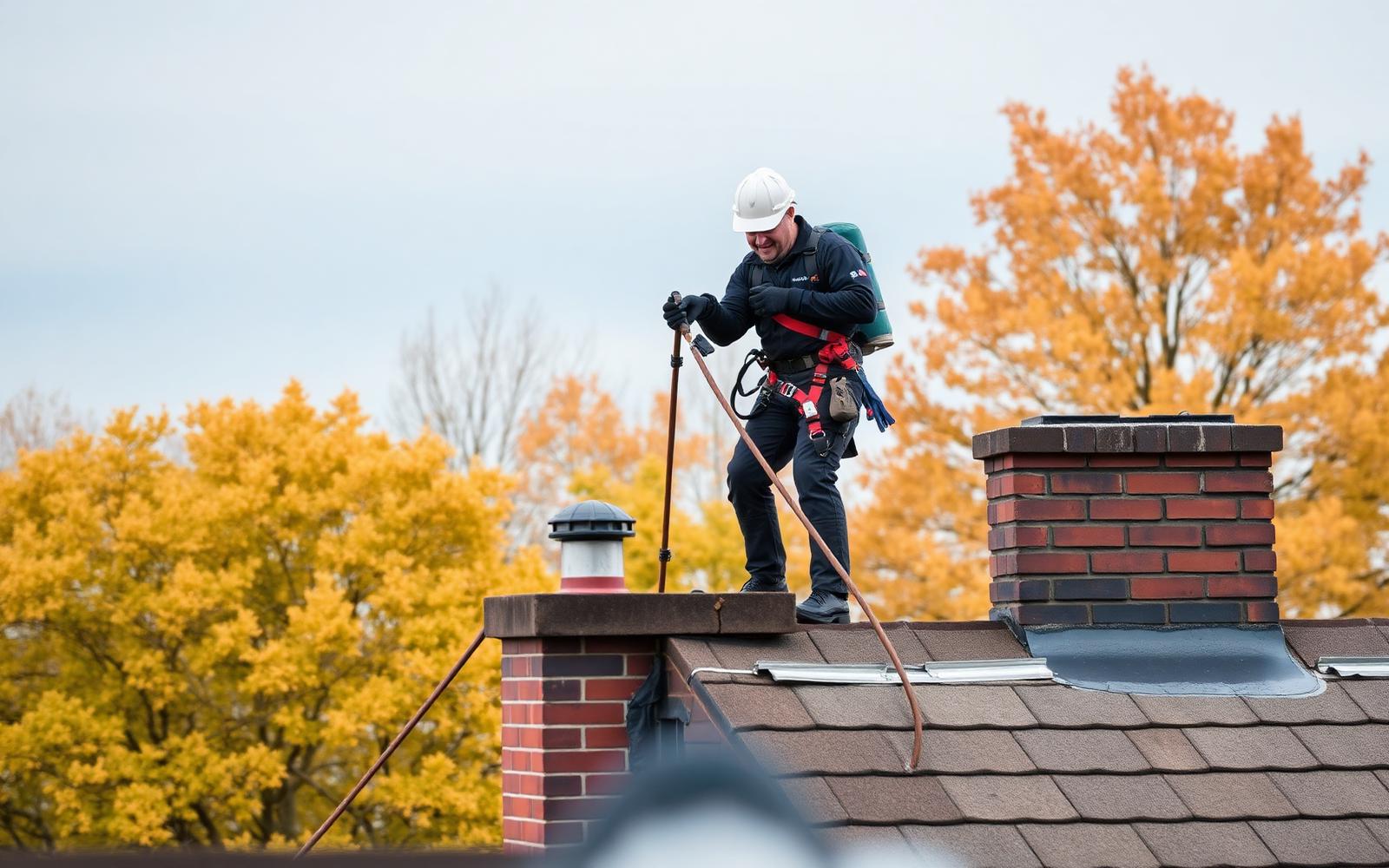
Urban Essex and Hudson are dominated by 2 to 4 family rowhouses with shared flues. Here is why that geometry matters and what we look for on every inspection.
Newark, Jersey City, Hoboken, East Orange, Union City, West New York, and the older sections of Bayonne share a specific housing typology: brick rowhouses and 2-to-4-family homes built between roughly 1890 and 1930, with tall shared chimney stacks serving multiple units and multiple appliances. This construction is beautiful, durable, and full of chimney-inspection landmines that suburban single-family sweeps never encounter.
The shared flue problem
Under NFPA 211, each fuel-burning appliance is supposed to have its own dedicated flue. In an 1895 Hoboken brownstone, you routinely find a single 12x12 chimney stack serving the first-floor furnace, the first-floor water heater, the second-floor apartment's furnace, the second-floor water heater, and sometimes a decorative fireplace on top of all that.
The immediate risks: (1) exhaust from one appliance interferes with the draft of another, (2) a blockage or debris pack affects every appliance sharing the flue simultaneously, (3) any oil-to-gas conversion on one unit changes the flue temperature dynamics for every other appliance, (4) CO from a rusted vent connector on one floor can migrate into the shared stack and back down into a neighboring unit.
What we actually inspect on urban 2-4 families
- Every vent connector at every appliance on every floor (not just the top-floor fireplace)
- The relative BTU loads on each appliance vs. the shared flue cross-section
- Any evidence of positive-pressure spillage at the appliance draft hood (soot marks, corrosion above the appliance)
- Any horizontal offset in the flue that could catch debris from a higher-floor appliance
- The chimney termination on the roof, which in rowhouse construction is often shorter than the 3-2-10 code rule requires because of taller adjacent buildings
The mortar-and-tile reality at 130 years old
Original lime-based mortar in an 1890s Newark or Jersey City chimney has largely returned to sand by now. Original clay tiles, when they exist, are almost universally cracked, spalled, or missing sections. Many of these chimneys were never tiled at all, just soft brick with parged interior joints.
The honest scope for a legacy urban chimney is usually a full stainless reline for every active appliance flue, structural crown rebuild, cap install, and exterior tuckpointing. In a 4-story Hoboken brownstone, this can easily total $8,000 to $18,000 across all flues. It is also the only path to code compliance and safe operation.
The abandoned-flue trap
Many urban rowhouses have flues that were once used for coal boilers, kitchen ranges, or unit-heater stoves and have been sealed at the bottom and forgotten. These abandoned flues collect water, debris, and sometimes birds. When we scan a shared chimney we always identify every flue in the stack, active and inactive, because an abandoned flue with a collapsed liner can transmit water and debris laterally into an active flue serving a working appliance.
For landlords and multi-family owners
Every unit in a 2-4 family should be part of a single annual inspection contract, not scheduled per-tenant. The flues are interconnected; the inspection needs to be too. A Level 2 on the whole stack, once a year, with a written report per unit, is the standard we recommend for every rental multi-family in Essex and Hudson.
Chimney Inspection in the towns this guide covers
Each local page lists pricing, code notes, and scheduling for that municipality:
- Chimney Inspection in Newark, Essex County NJ
- Chimney Inspection in Jersey City, Hudson County NJ
- Chimney Inspection in Bayonne, Hudson County NJ
- Chimney Inspection in East Orange, Essex County NJ
- Chimney Inspection in Union City, Hudson County NJ
- Chimney Inspection in North Bergen, Hudson County NJ
- Chimney Inspection in Irvington, Essex County NJ
- Chimney Inspection in Hoboken, Hudson County NJ
Nearby New Jersey towns we cover
Not in one of the towns above? These are the regions where this issue comes up most, with a dedicated local page for each municipality.
Older urban housing stock
Pre-1940 row houses and multi-family buildings commonly have unlined or shared flues.
North Jersey freeze-thaw belt
Repeated freeze-thaw cycles open mortar joints and spall brick faster than the rest of the state.
Central & suburban New Jersey
Post-war and 1980s subdivisions where prefab fireboxes and factory chases dominate.
Ready to schedule?
Certified NJ sweeps. Written quote within 24 hours by email or text, no phone tag.
Get My Free Quote